Self-Awareness Is A Super Power
Most leaders believe they know themselves well. Research suggests otherwise. In this inaugural issue, we explore why self-awareness is one of the most important—and most overlooked—leadership capabilities, and why developing it is not simply a leadership development initiative, but a strategic business imperative.
SERIES 1: LEADERSHIP BLIND SPOTS AND SELF-AWARENESS
Chris Patzwald
6/8/20262 min read

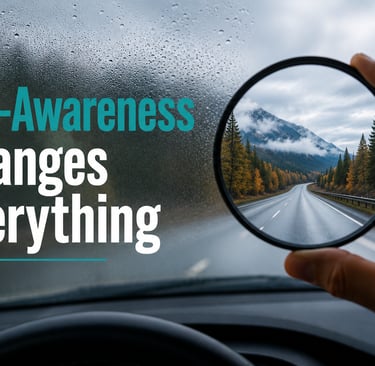
Self-Awareness Is a Leadership Superpower
Most leaders believe they know themselves well.
Yet research from organizational psychologist Tasha Eurich found that while 95% of people believe they are self-aware, only 10–15% actually are.
Think about that for a minute.
If leadership effectiveness depends on understanding how our behaviours, decisions, and communication impact others, then many leaders may be operating with significant blind spots.
This is more than a leadership development issue; it is a business risk management issue.
At the executive level, the consequences can be substantial. Recent research from Hogan Assessments' The Leadership Divide study found that:
"Ineffective leadership is expensive, and most organizations don't even see the problem until the damage has been done—after productivity stalls, turnover climbs, and exit interviews reveal a climate of disengagement."
The study, which included more than 10,000 participants and 21,000 executives globally, also found that CEOs account for approximately 17–30% of organizational performance.
That’s huge.
When a leader lacks self-awareness, the cost is rarely borne by the leader alone. It is absorbed by their teams, their culture, and ultimately their organization's performance.
This reality should concern Boards, CEOs, CHROs, and investors alike.
One of the most effective ways to mitigate this risk is to help leaders see themselves more clearly.
Tools such as 360-degree feedback assessments and strengths-based evaluations can be uncomfortable. They require vulnerability, curiosity, and a willingness to hear perspectives that may challenge long-held assumptions.
However, when these processes are designed and facilitated professionally, the benefits can be significant:
Greater self-awareness
Improved decision-making
Stronger leadership effectiveness
Recognition of strengths and achievements
Input into succession planning
More targeted leadership development
Better goal setting and accountability
As Tasha Eurich notes:
"When we see ourselves clearly, we are more confident and more creative. We make sounder decisions, build stronger relationships, and communicate more effectively."
The greatest danger is not having a blind spot.
The greatest danger is not knowing you have one.
If you are accountable for leadership outcomes, consider what tools and processes exist within your organization to help leaders gain greater clarity about themselves and their impact on others.
Because better awareness leads to better decisions and better decisions lead to better outcomes.
In my next article, I will explore the five most common leadership blind spots I encounter when working with executives and leadership teams.
Self-Awareness Is a Leadership Superpower
Most leaders believe they know themselves well.
Yet research from organizational psychologist Tasha Eurich found that while 95% of people believe they are self-aware, only 10–15% actually are.
Think about that for a minute.
If leadership effectiveness depends on understanding how our behaviours, decisions, and communication impact others, then many leaders may be operating with significant blind spots.
This is more than a leadership development issue; it is a business risk management issue.
At the executive level, the consequences can be substantial. Recent research from Hogan Assessments' The Leadership Divide study found that:
"Ineffective leadership is expensive, and most organizations don't even see the problem until the damage has been done—after productivity stalls, turnover climbs, and exit interviews reveal a climate of disengagement."
The study, which included more than 10,000 participants and 21,000 executives globally, also found that CEOs account for approximately 17–30% of organizational performance.
That’s huge.
When a leader lacks self-awareness, the cost is rarely borne by the leader alone. It is absorbed by their teams, their culture, and ultimately their organization's performance.
This reality should concern Boards, CEOs, CHROs, and investors alike.
One of the most effective ways to mitigate this risk is to help leaders see themselves more clearly.
Tools such as 360-degree feedback assessments and strengths-based evaluations can be uncomfortable. They require vulnerability, curiosity, and a willingness to hear perspectives that may challenge long-held assumptions.
However, when these processes are designed and facilitated professionally, the benefits can be significant:
Greater self-awareness
Improved decision-making
Stronger leadership effectiveness
Recognition of strengths and achievements
Input into succession planning
More targeted leadership development
Better goal setting and accountability
As Tasha Eurich notes:
"When we see ourselves clearly, we are more confident and more creative. We make sounder decisions, build stronger relationships, and communicate more effectively."
The greatest danger is not having a blind spot.
The greatest danger is not knowing you have one.
If you are accountable for leadership outcomes, consider what tools and processes exist within your organization to help leaders gain greater clarity about themselves and their impact on others.
Because better awareness leads to better decisions and better decisions lead to better outcomes.
In my next article, I will explore the five most common leadership blind spots I encounter when working with executives and leadership teams.